Check Your Propane Levels From Your Phone

What’s the Replacement Age of Residential Propane Tank Systems?

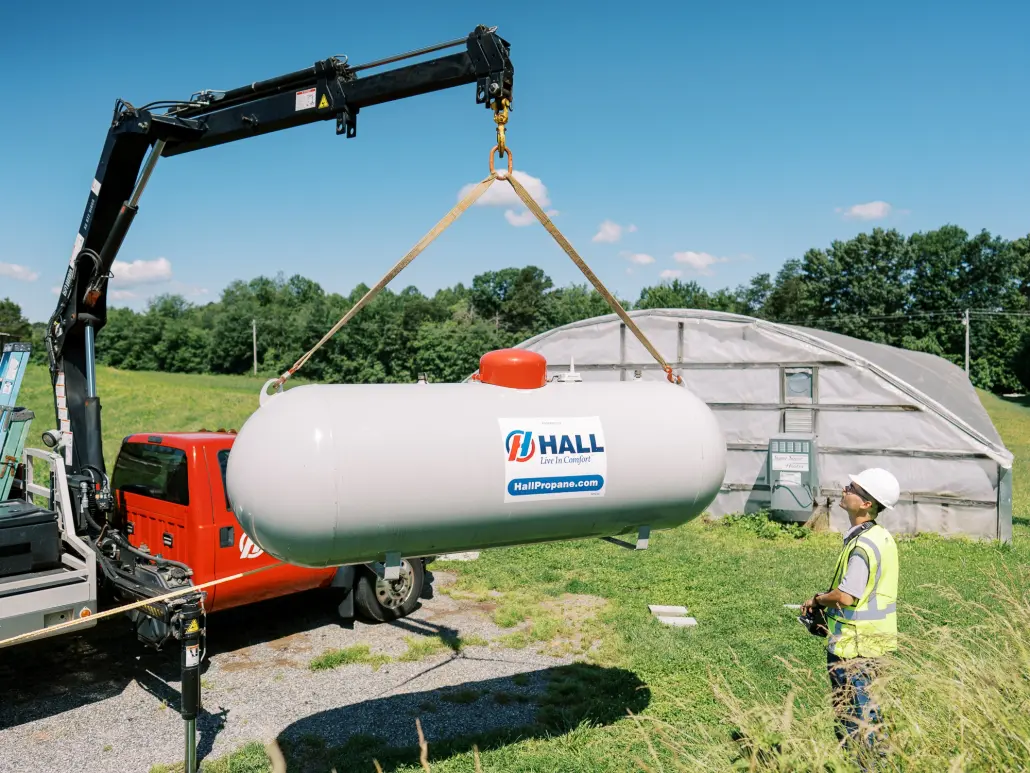
A Hall Propane service technician operating a crane arm to lower a large white residential propane tank into place outdoors.

The truth about propane tank expiration

If you rely on a residential propane tank to heat your home, cook meals, or warm your water, you might wonder: does my propane tank actually expire?

The short answer is no, a propane tank doesn’t have an automatic “expiration date” like a carton of milk. However, their lifespan and maintenance requirements depend on the specific type of tank you have.

Portable Cylinders vs. Stationary Propane Tank Options

To understand tank replacement, it helps to know the difference between the two main types of propane containers:

  • DOT Cylinders (Department of Transportation): These smaller, portable tanks power grills, patio heaters, and RVs (usually 20 to 100 lbs). Because users frequently move them, federal regulations require recertification or replacement 12 years after manufacture, followed by regular requalification cycles.

  • ASME Tanks (American Society of Mechanical Engineers): These large, stationary tanks (120 gallons or larger) sit outside homes. Delivery trucks fill them on-site. Because they remain fixed in one spot, ASME standards do not require mandatory periodic requalification schedules.

A well-maintained stationary propane tank can safely remain in service for 30 to 50 years or more.

Focus on Physical Condition, Not Age

Overall fuel safety revolves around physical condition rather than age. A clean, painted, and properly supported older propane tank can easily outlast a neglected newer tank.

Key factors that determine tank safety include:

  • Corrosion and Pitting: Light surface rust is cosmetic, but deep metal pitting compromises structural safety.

  • Dents and Physical Damage: Lawn equipment or falling debris can strike the tank and create dangerous stress points.

  • Valve and Regulator Health: Weather exposure, debris, or worn seals can degrade valves, disrupt gas control, and cause leaks.

  • Foundation Stability: Soil settling or leaning concrete pads strain the connecting lines.

How Hall Keeps Your Setup Safe

You do not have to inspect your fuel equipment alone. Hall keeps your residential propane system in optimal condition year-round.

Hall’s certified technicians conduct thorough inspections during routine fuel deliveries, new service setups, and annual heating checkups. They examine the tank shell for pitting, inspect valves and regulators, clear regulator vents, and perform pressure drop tests to confirm your lines have no leaks.

Technicians can perform on-site maintenance to extend equipment life if they detect minor surface rust or valve wear. If structural issues or severe corrosion make your current tank unsafe, Hall will guide you through a seamless replacement process.

Professional propane delivery service technician preparing fuel equipment for reliable home and commercial delivery