The Surprising Connection Between Your HVAC System & Allergy Relief

The Surprising Connection Between Your HVAC System & Allergy Relief

Many homeowners don’t realize how much their HVAC system affects indoor air quality (IAQ). Beyond keeping your home comfortable, it also helps regulate humidity, filter airborne particles and keep the air moving. All of this plays a bigger role in your well-being than you might think—especially when it comes to allergies.

Transform Your Home Into an Allergy-Free Zone.

Your home should be a place of comfort and relief, but it can feel like a battleground for allergy sufferers. Dust mites, pet dander, pollen and mold spores often linger in the air, triggering sneezing fits and stuffy noses. Even regular cleaning might not be enough—many allergens are microscopic and can become airborne again with the slightest movement. That’s where your HVAC system comes in.

Your HVAC System Can Be Your Best Ally Against Allergies.

Beyond heating and cooling, your HVAC system works silently to keep your air cleaner. When properly maintained, it does this through:

  • Air filtration and purification
  • Humidity regulation
  • Air circulation and ventilation

High-Efficiency Filters Are Your First Line of Defense.

A quality air filter can capture up to 99.97% of airborne particles, offering much-needed relief for allergy sufferers. When selecting filters, consider:

  • MERV ratings – Higher numbers mean better filtration (aim for MERV 11 or higher for allergy relief)
  • Regular replacements – Swap out filters every 1-3 months to keep them effective
  • Proper fit – The right size and type ensure optimal performance

UV Light Systems Are the Invisible Shield Against Allergens.

UV light technology adds an extra layer of protection by targeting what filters can’t catch. Installed directly in your heating and cooling system, these lights destroy microscopic threats that slip past regular filters. Think of it as an extra defense against:

  • Mold spores before they can grow
  • Bacteria and viruses in the air
  • Musty odors caused by microbial growth

Simple HVAC Maintenance = Powerful Allergy Protection.

Routine maintenance keeps your system running efficiently and your air cleaner. Key steps include:

  1. Change filters on a schedule
  2. Keep vents and returns clean
  3. Schedule a professional unit, duct and coil cleaning
  4. Conduct seasonal system check-ups

Smart HVAC Habits Help Achieve Maximum Allergy Relief.

Beyond regular maintenance, small changes can make a big difference in your air quality:

  • Keep indoor humidity between 30-50% to prevent mold and dust mites

  • Use the "fan only" setting periodically to improve filtration

  • Close windows during peak pollen times

  • Run your system briefly after vacuuming to capture stirred-up allergens

Breathe Easier With the Right HVAC Solutions.

Your HVAC system can be your best ally in the fight against indoor allergens. With the right filters, maintenance and a few strategic habits, you can create a home where everyone breathes easier.

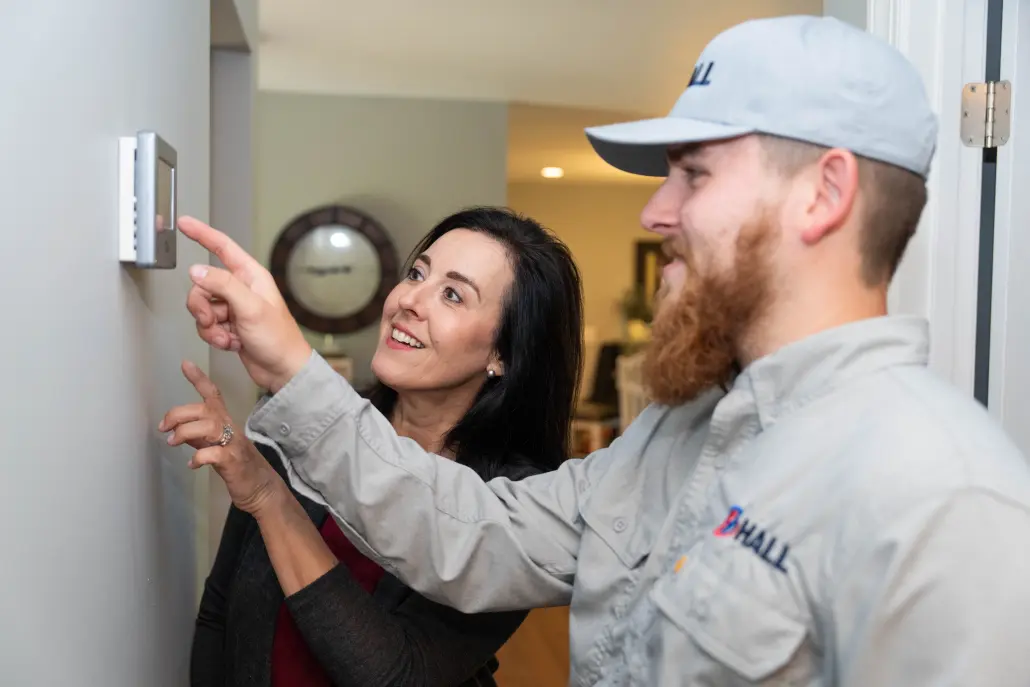
HVAC tech adjusting the thermostat with the homeowner